This is common after knee replacement. It does not mean you are doing something wrong, but it does matter because your quadriceps play a major role in walking, knee straightening, stairs, balance, and confidence.
Quick Answer
Your quad may feel shut down after knee replacement because pain, swelling, joint irritation, and surgery-related stress can interfere with how well the muscle activates. This is often called quadriceps inhibition or arthrogenic muscle inhibition.
The answer is usually not to force harder exercises right away. The better approach is to reduce swelling, practice frequent low-level quad activation, restore knee straightening, and gradually rebuild strength as your knee tolerates more load.
Free Roadmap
Not sure where you are in knee replacement recovery?
Download the Total Knee Replacement Recovery Roadmap to see what usually matters most at each stage, how to think about swelling and stiffness, and when to progress, hold steady, or modify.
Key Takeaways
- Quad shutdown is common after knee replacement, especially in the early weeks.
- Swelling can make the knee feel stiff and can also make the quad harder to activate.
- Early quad work should focus on quality contractions, knee straightening, and frequent practice.
- NMES may help some people improve quad activation, but it should support rehab, not replace exercise.
- Walking may improve before quad strength is fully restored, so strengthening still matters later in recovery.
Why the Quad Feels Shut Down
The quadriceps are the large muscles on the front of your thigh. They help straighten your knee, support your body weight, control walking, and manage stairs.
After knee replacement, the quad often has a hard time turning on because the knee has gone through a major surgical event. Pain, swelling, joint irritation, and reduced activity can all change the signal between your nervous system and your muscle.
This is one reason the quad may feel weak even when you are trying hard. The muscle is not always simply “out of shape.” Sometimes the knee is irritated enough that the nervous system limits how strongly the muscle can contract.
Why This Matters for Recovery
Quad activation matters because it affects several key parts of recovery:
- Knee straightening: The quad helps you fully straighten and control the knee.
- Walking: Weak quad control can make the knee feel unstable or cause you to limp.
- Stairs: Going up and down stairs requires more quad strength than level walking.
- Getting up from chairs: Sit-to-stand strength depends heavily on the quad and hip muscles.
- Confidence: If the knee feels unreliable, people often move less or compensate more.
This is why early quad activation is important, but it also needs to be dosed well. If your knee is very swollen or irritated, pushing harder may not create a better contraction. Sometimes the first step is calming the knee down enough that the quad can work better.
What This Means for Your Recovery
If your quad feels shut down, your recovery plan should usually focus on three things:
1. Calm the Knee Down Enough to Get a Better Contraction
If swelling is high, the knee may feel tight, heavy, and hard to control. That can make quad exercises feel frustrating. Swelling management, gentle movement, elevation, short walks, and avoiding big flare-ups can help create a better environment for the quad to work.
2. Practice Simple Quad Activation Often
Early quad exercises do not need to be fancy. They need to be consistent. The goal is to practice getting a clean contraction without holding your breath, tensing your whole body, or pushing into sharp pain.
3. Gradually Rebuild Strength Once Activation Improves
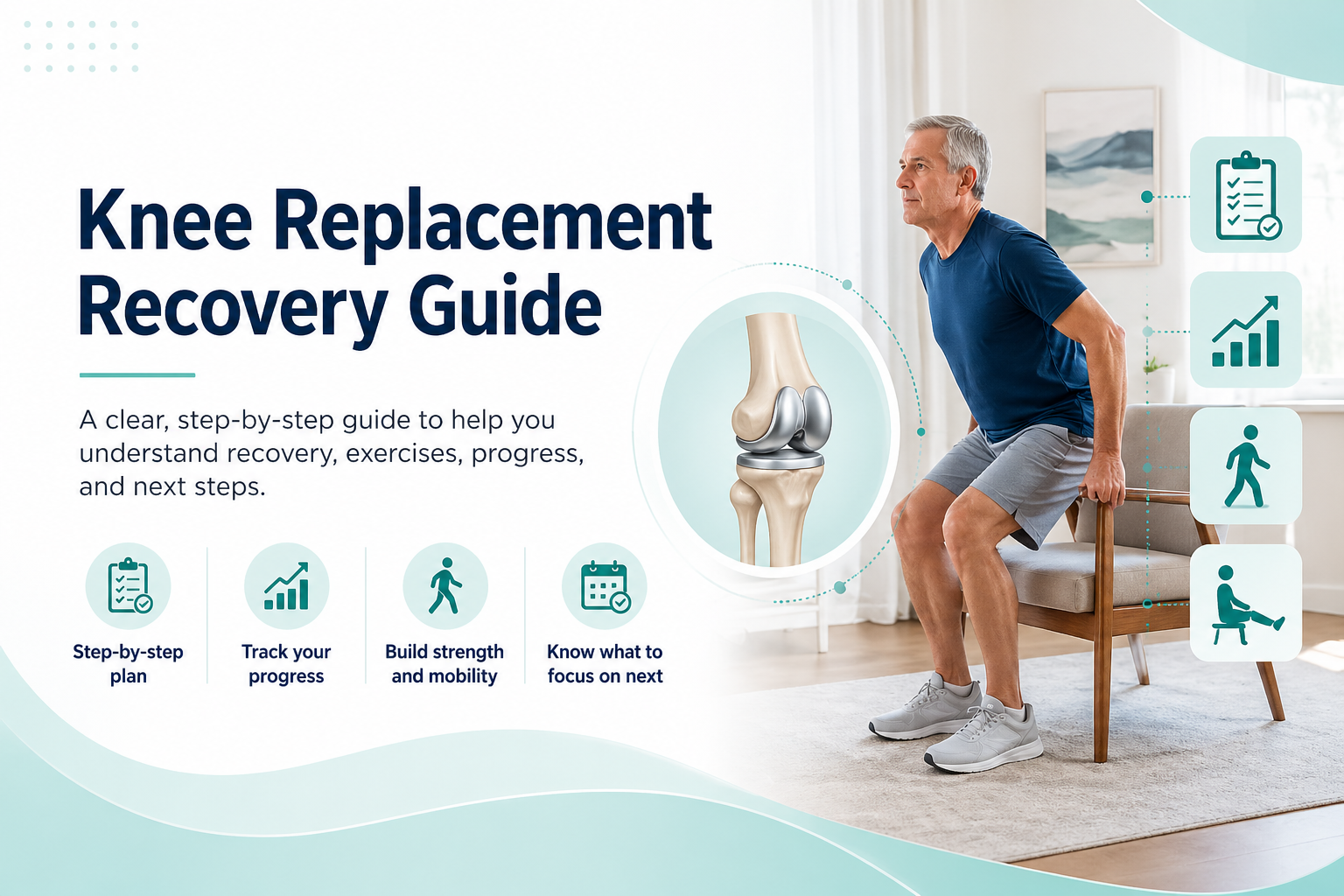
Once you can contract the quad more reliably, the next step is progressive strengthening. That may include straight leg raises, sit-to-stands, step-ups, controlled squats, leg press variations, and other exercises based on your phase of recovery and symptom response.
What To Do Next
Here are practical ways to approach quad shutdown after knee replacement.
Start With Quad Sets
A quad set is a simple exercise where you tighten the thigh muscle and try to straighten the knee. Think about gently pressing the back of the knee toward the bed or floor while the leg is supported.
The goal is not to crush the knee down aggressively. The goal is to feel the thigh muscle tighten and improve control over time.
Use Knee Straightening Positions
If the knee stays bent and guarded all day, the quad may have a harder time doing its job. Comfortable knee straightening positions can help you practice extension without forcing it.
This may include resting with the heel supported so the knee can gently settle straighter, as long as it is tolerable and does not create a major flare-up.
Practice Short, Frequent Sessions
One long, exhausting session is usually not the best strategy early on. Shorter sessions spread across the day often work better.
For example, a few rounds of quad sets, gentle knee straightening, ankle pumps, and short walks may be more useful than trying to force one intense workout.
Add Straight Leg Raises Only When Ready
Straight leg raises can be useful, but they work best when you can keep the knee reasonably straight and controlled. If the knee bends, lags, or feels completely uncontrolled when you try to lift the leg, spend more time on basic quad activation and knee straightening work first.
Progress Toward Functional Strength
As your recovery progresses, the quad needs to do more than tighten on command. It needs to help you stand, walk, step, squat, climb stairs, and control your body weight.
That is why later rehab should include functional strengthening, not just early bed exercises.
Where NMES May Fit
Neuromuscular electrical stimulation, or NMES, uses electrical stimulation to help create a muscle contraction. For some people after knee replacement, NMES can be a helpful add-on when the quad is difficult to activate voluntarily.
But NMES should not be treated like a magic fix. It works best as a support tool alongside a good rehab plan, not as a replacement for movement, strengthening, walking practice, and progressive loading.
NMES May Be Worth Considering If:
- You have a hard time getting a visible or strong quad contraction.
- Your straight leg raise has a large lag or feels very uncontrolled.
- Your quad still feels very inhibited despite consistent practice.
- You are using it as part of a structured rehab plan, not as a stand-alone solution.
NMES Is Not the Same as TENS
TENS is usually used for pain modulation. NMES is used to help stimulate muscle contraction. They are not the same tool, even though both use electrical stimulation.
If you use NMES, the goal should be a strong, tolerable quad contraction. Light tingling without a meaningful muscle contraction is unlikely to do much for quad strength.
When possible, pair the stimulation with an active effort to tighten the quad rather than letting the machine do all the work.
Common Mistakes
- Assuming quad shutdown means something is wrong with the implant.
- Trying to force harder exercises when the knee is very swollen.
- Only walking and skipping targeted quad strengthening.
- Stopping quad work once walking starts to feel better.
- Using NMES passively without also practicing active contraction.
- Progressing to harder exercises before the knee can stay controlled.
How to Know If You’re Making Progress
Progress is not always dramatic at first. Early improvements may feel small, but they matter.
Signs Your Quad Control May Be Improving:
- You can feel a stronger thigh contraction during quad sets.
- The knee feels less heavy when you walk.
- You can straighten the knee with better control.
- You can lift the leg with less lag or assistance.
- Sit-to-stands feel more stable.
- Stairs slowly feel less intimidating.
- You limp less as swelling and strength improve.
The goal is not perfect control overnight. The goal is steady improvement in activation, strength, and confidence over time.
When To Be More Cautious
Quad weakness is common after knee replacement, but some changes deserve more caution.
Be more cautious if you notice:
- A sudden new inability to lift or straighten the leg after a fall or injury.
- Rapidly increasing swelling, redness, warmth, or worsening pain.
- New calf pain, calf swelling, or shortness of breath.
- Fever, chills, drainage, or signs that the incision is worsening.
- Weakness that is getting worse instead of gradually improving.
If you notice these symptoms, do not try to solve them with harder exercise. Follow your surgeon’s post-op instructions or contact your medical team.
Related Learning
Want to keep learning about this part of recovery? These articles may help:
- Total Knee Replacement Recovery Timeline: What to Expect Week by Week
- Why Is My Knee Still Swollen After Knee Replacement?
- How Do I Know If I’m Doing Too Much After Knee Replacement?
- Why Are Stairs Still Hard After Knee Replacement?
- Why Walking Alone Is Not Enough After Knee Replacement
- How to Keep Getting Stronger After Knee Replacement
FAQ
Why does my quad feel weak after knee replacement?
Your quad can feel weak because surgery, swelling, pain, and joint irritation can interfere with muscle activation. The muscle may also lose strength from reduced activity before and after surgery.
Is quad shutdown normal after knee replacement?
Yes, some difficulty activating the quad is common after knee replacement, especially early in recovery. It should gradually improve with swelling management, quad activation exercises, walking practice, and progressive strengthening.
What exercises help wake up the quad?
Common early exercises include quad sets, short arc quad (SAQ) work when tolerated, knee straightening work, short walks, and straight leg raises when you can control the leg well enough. Later recovery usually needs more functional strengthening like sit-to-stands, step-ups, and controlled squatting patterns.
Does NMES help after knee replacement?
NMES may help some people improve quad activation when the muscle is very inhibited, but it should be used as an add-on to rehab, not a replacement for exercise. It is most useful when it produces a real, tolerable quad contraction and is paired with active effort.
Why are stairs hard if I can already walk?
Stairs require more quad strength, balance, control, and confidence than walking on level ground. It is common for walking to improve before stairs feel normal.
How long does it take for quad strength to come back?
Quad strength often improves gradually over months. Many people make progress in the first 6 to 12 weeks, but strength, endurance, and confidence can continue improving for 6 to 12 months.