

If you are preparing for total knee replacement, the weeks before surgery matter.
Surgery can change the damaged joint surfaces, but it does not automatically restore strength, motion, walking quality, or confidence. The stronger and more prepared you are going into surgery, the better foundation you usually have for the early recovery process.
That is where prehabilitation, often called prehab, can help.
Prehab is not about doing intense workouts right before surgery. It is about building as much strength, motion, fitness, confidence, and home readiness as you reasonably can before the operation.
Quick Answer
Prehab before total knee replacement can help you prepare your body and your home for surgery. The biggest priorities are improving leg strength, maintaining knee motion, building low-impact conditioning, practicing safe movement, and planning your early recovery environment.
The goal is not to “fix” the knee before surgery. The goal is to enter surgery with better strength, better expectations, and a clearer plan for what recovery will ask of you.
Start with tolerable exercises, avoid major flare-ups, and build gradually so the knee can recover between sessions.
Free Roadmap
Not sure where you are in knee replacement recovery?
Download the Total Knee Replacement Recovery Roadmap to see what usually matters most at each stage, how to think about swelling and stiffness, and when to progress, hold steady, or modify.
Key Takeaways
- Prehab helps you prepare for surgery and recovery, not avoid surgery once it is already needed.
- Strength, motion, low-impact conditioning, balance, nutrition, expectations, and home setup all matter.
- The quadriceps, hips, calves, and hamstrings are important because they support walking, stairs, transfers, and early rehab.
- Prehab should be challenging enough to help, but not so aggressive that it repeatedly flares the knee.
- Recovery planning before surgery can reduce stress after surgery because you already know what the first few weeks require.
Why Prehab Matters Before Knee Replacement
Total knee replacement is usually done because knee arthritis has significantly limited pain, walking, stairs, exercise, or daily activity.
By the time surgery is scheduled, many people have already lost strength, endurance, balance, and confidence because the painful knee has been limiting activity for months or years.
That means you are not only preparing for surgery. You are also preparing to rebuild capacity that may have been declining before surgery.
The physical therapy clinical practice guideline for total knee arthroplasty recommends that physical therapists design preoperative exercise programs and teach patients scheduled for TKA to perform strengthening and flexibility exercises. Physical Therapist Management of Total Knee Arthroplasty Clinical Practice Guideline
What Prehab Can and Cannot Do
Prehab can help you improve your starting point before surgery. It may help with strength, mobility, confidence, and understanding what recovery will involve.
But prehab is not a guarantee of a faster or perfect recovery. The research is mixed because programs, patient needs, surgery timelines, and outcomes vary.
A 2023 systematic review found that home-based prehabilitation before hip or knee arthroplasty may improve preoperative pain and function and reduce hospital length of stay, but it was less clear whether those gains consistently translated into better postoperative outcomes. Home-based prehabilitation systematic review and meta-analysis
A better way to think about prehab is this: it gives you a better foundation. It does not remove the need for a well-dosed recovery plan after surgery.
What To Focus On Before Surgery
A good prehab plan should match your current knee tolerance, strength, balance, medical status, and surgery timeline.
You do not need a complicated program. You need the right priorities done consistently.
1. Build Leg Strength
Strength matters because your muscles help support the knee during walking, stairs, getting in and out of chairs, and early post-op exercises.
The quadriceps are especially important because they help straighten the knee, control walking, and manage stairs. But the quad is not the only muscle that matters. The hips, calves, hamstrings, and trunk all contribute to how well you move.
Useful strength categories may include:
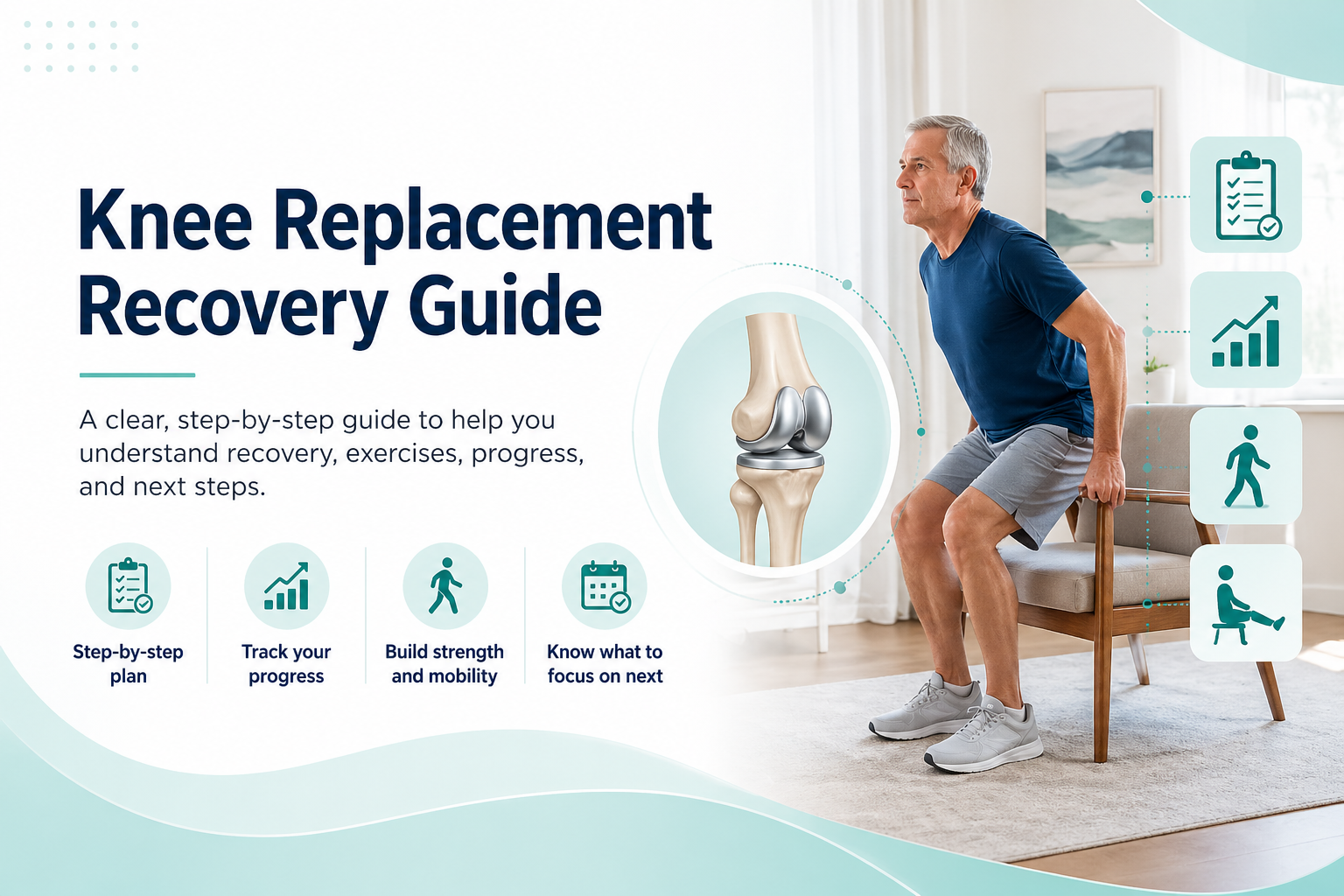
- Sit-to-stands from a chair.
- Quad sets or thigh squeezes.
- Straight leg raises if tolerated.
- Supported mini squats.
- Step-ups to a manageable height.
- Hip strengthening.
- Calf raises.
- Balance and control drills.
The goal is not to destroy the knee before surgery. The goal is to build strength with a dose the knee can recover from.
2. Maintain Knee Motion
Knee motion matters before and after surgery. Bending helps with sitting, stairs, cars, and daily activity. Straightening helps with walking, standing, and quad activation.
Prehab should usually include gentle work on both knee bending and knee straightening.
Motion work may include:
- Heel slides.
- Seated knee bends.
- Comfortable knee straightening positions.
- Short movement breaks during the day.
- Gentle stretching that does not create a major flare-up.
If the knee is very swollen or irritable, forcing motion aggressively may make it worse. Small, frequent, tolerable motion is often more useful than one intense stretching session.
3. Build Low-Impact Conditioning
Low-impact aerobic exercise can help maintain fitness without repeatedly pounding the joint.
Useful options may include stationary biking, recumbent biking, pool exercise, walking in manageable doses, or other low-impact activity that your knee tolerates.
Conditioning matters because early recovery takes energy. Better fitness before surgery can make the first few weeks feel less overwhelming.
4. Practice Safe Movement
Prehab is also a chance to practice movements you will need after surgery.
Useful skills may include:
- Getting in and out of a chair.
- Getting in and out of bed.
- Using a walker or cane if recommended.
- Going up and down stairs safely.
- Turning without rushing.
- Practicing short walking bouts with good control.
These skills reduce guesswork after surgery. When you already know the plan, early recovery tends to feel less chaotic.
5. Prepare Your Home
Home setup matters because the first days after surgery are not the time to reorganize everything.
Helpful home preparation may include:
- Clear walkways and remove tripping hazards.
- Set up a comfortable resting area.
- Keep frequently used items within easy reach.
- Plan where you will ice, elevate, and do exercises.
- Arrange help with meals, transportation, pets, errands, or stairs if needed.
- Make sure bathroom access is safe.
A prepared home makes it easier to focus on recovery instead of problem-solving basic logistics after surgery.
How Early Should You Start Prehab?
If you have several months before surgery, that is helpful. A longer runway gives you more time to build strength, mobility, conditioning, and confidence gradually.
Starting around 8 to 12 weeks before surgery can be useful when possible, but even a shorter window can still help you learn the exercises, prepare your home, and understand what early recovery will require.
The most important point is to start with what your knee can tolerate now. Do not try to make up for months of weakness in one week.
How Hard Should Prehab Feel?
Prehab should feel purposeful, but it should not keep flaring your knee up.
A reasonable session may create muscle fatigue or mild soreness, but the knee should not be much more swollen, stiff, painful, or unstable later that day or the next morning.
Signs You May Need to Adjust
- Swelling is clearly worse later that day or the next morning.
- The knee feels heavier, tighter, or harder to bend after exercise.
- You are limping more after the session.
- Pain changes the way you walk or move.
- Soreness keeps building over several days instead of settling.
- You feel like every prehab session requires a major recovery period.
If those signs show up, reduce one or two variables. You may need fewer exercises, fewer reps, less resistance, shorter walks, more support, or more recovery between sessions.
Nutrition, Sleep, and General Health Still Matter
Prehab is not only exercise. Your body needs resources to handle surgery and recovery.
Other useful preparation areas include:
- Nutrition: Eat consistent meals with enough protein and nutrients to support healing and muscle recovery.
- Hydration: Stay well hydrated unless you have medical restrictions.
- Sleep: Build a sleep routine before surgery because poor sleep can make recovery feel harder.
- Medical readiness: Complete pre-op testing and follow instructions for medications, blood sugar, smoking, dental work, or other health factors.
- Support: Arrange help before you need it.
These things do not replace exercise, but they support the recovery environment.
Mental Preparation Is Part of Prehab
Knowing what to expect can reduce anxiety and improve follow-through.
Early recovery usually includes swelling, stiffness, soreness, bruising, sleep disruption, quad weakness, and short bouts of walking. That can feel stressful if you are not expecting it.
Prehab gives you a chance to learn the recovery rhythm before surgery: move, manage swelling, work on motion, activate the quad, walk safely, recover, then repeat.
Common Mistakes
- Waiting until after surgery to think about strength, home setup, or recovery expectations.
- Trying to “cram” fitness in right before surgery.
- Only stretching and skipping strength.
- Only walking and skipping targeted leg strengthening.
- Ignoring swelling or limping after prehab sessions.
- Doing exercises that repeatedly flare the knee because they feel productive in the moment.
- Forgetting to prepare the home, transportation, and support system.
What This Means After Surgery
Prehab helps you start recovery from a better place, but surgery still creates swelling, soreness, weakness, and healing demands.
After surgery, the priorities usually shift toward swelling management, gentle motion, quad activation, safe walking, and gradually rebuilding strength.
That is why a prehab plan and a recovery plan should connect. The work you do before surgery should prepare you for the work you will need after surgery.
Related Learning
Want to keep learning about knee replacement preparation and recovery? These articles may help:
- Knee Replacement Surgery Step-by-Step: What Happens During the Procedure?
- Total Knee Replacement Recovery Timeline: What to Expect Week by Week
- Why Does My Quad Feel Shut Down After Knee Replacement?
- Why Walking Alone Is Not Enough After Knee Replacement
- How to Keep Getting Stronger After Knee Replacement
FAQ
What is prehab before knee replacement?
Prehab is preparation before surgery. It usually includes strengthening, knee motion, low-impact conditioning, balance, education, and home preparation so you enter surgery with a better foundation.
When should I start prehab before knee replacement?
Starting 8 to 12 weeks before surgery can be helpful when possible, but even a shorter period can help you learn the exercises, prepare your home, and understand what early recovery will require.
What exercises should I do before knee replacement?
Common categories include quad activation, sit-to-stands, heel slides, gentle knee straightening, hip strengthening, calf raises, balance work, and low-impact conditioning. The best choices depend on your current pain, swelling, strength, balance, and what your knee tolerates.
Can prehab prevent the need for knee replacement?
Prehab is not meant to reverse advanced arthritis once surgery is already needed. Its main purpose is to improve your starting point before surgery and help you prepare for recovery.
Should prehab hurt?
Prehab should not repeatedly flare the knee. Mild muscle fatigue or tolerable soreness may be reasonable, but swelling, limping, stiffness, or pain that is clearly worse later that day or the next morning means the dose may need to be adjusted.
Does prehab make recovery faster?
Prehab may improve your pre-surgery function and can help you enter surgery more prepared. Research is mixed on how much it changes post-surgery outcomes, so it is best viewed as a foundation rather than a guarantee.