

But cortisone is not a cure for arthritis, and it should not be treated as the whole plan. The best use of a cortisone injection is often to create a window where movement, strengthening, and daily activity become more manageable.
This article explains what cortisone injections do, how they may help, why they are temporary, and how to use them wisely as part of a broader arthritis plan.
Quick Answer
Cortisone injections use a corticosteroid medication to reduce inflammation inside or around an irritated joint. For knee arthritis, they may reduce pain and swelling for a few weeks to a few months, but the response varies.
Cortisone can help calm symptoms, but it does not rebuild cartilage, restore strength, or fix the underlying arthritis. The relief window should be used to move better, strengthen, and build a more sustainable plan.
Free Roadmap
Thinking knee replacement may be next?
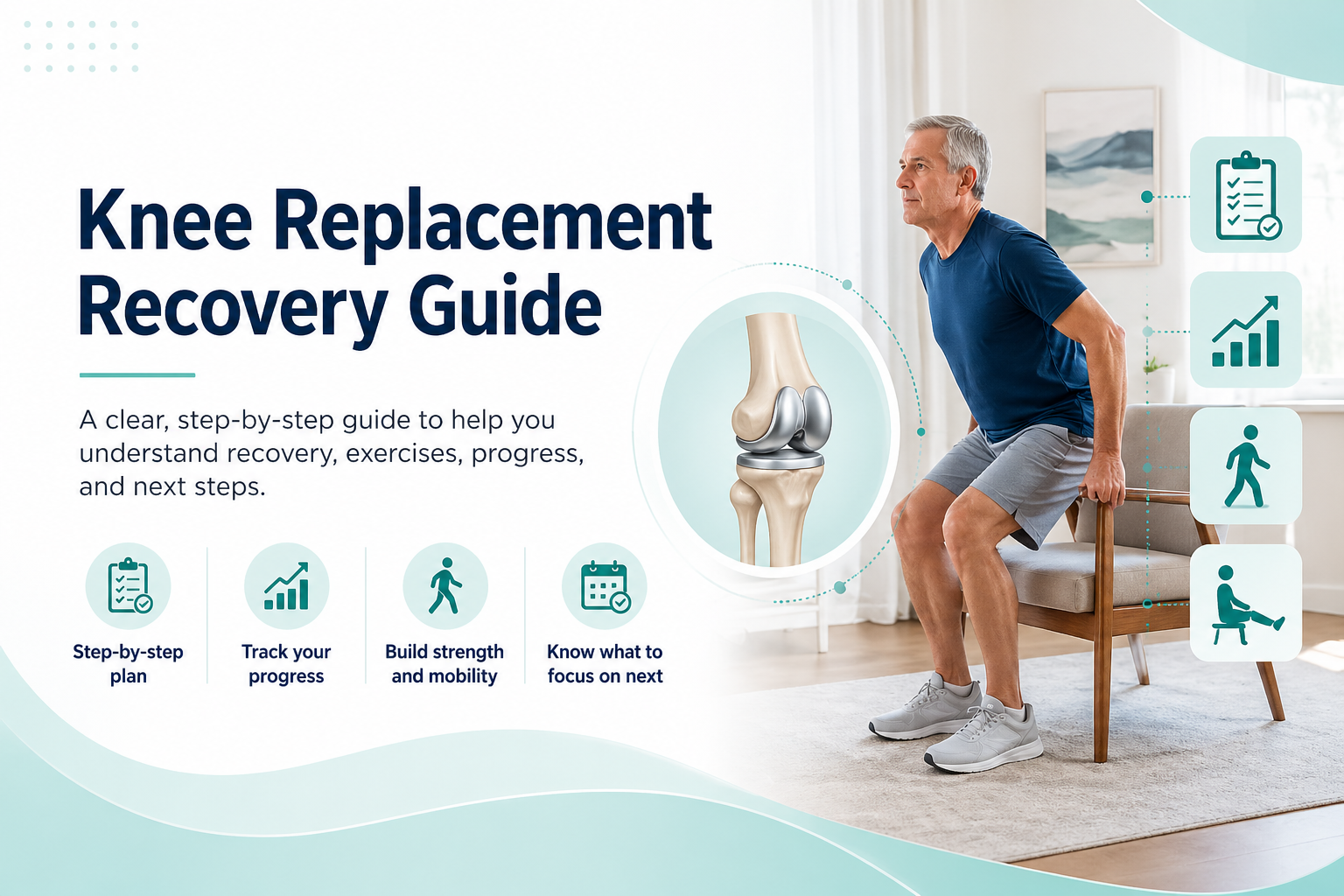
Download the Total Knee Replacement Recovery Roadmap to understand what usually matters most after surgery, how to think about swelling and stiffness, and when to progress, hold steady, or modify.
Key Takeaways
- Cortisone injections can reduce inflammation and provide short-term pain relief.
- Relief may begin within days, but the duration varies from person to person.
- Cortisone treats symptoms, not the underlying arthritis.
- Repeated injections should be used thoughtfully because risks and diminishing returns can matter.
- The best outcomes usually come when cortisone is paired with strength, movement, weight management when appropriate, and activity modification.
How Cortisone Injections Help
Cortisone is a corticosteroid medication. When injected into an arthritic knee, it can reduce inflammation and calm pain.
That can be useful when symptoms are limiting walking, sleep, exercise, stairs, or daily activity.
What to expect:
- Temporary relief: Some people get relief for a few weeks, while others may feel better for several months.
- Fast-acting effect: Pain and swelling may start improving within days, though the exact timing varies.
- Localized treatment: The medication is placed directly into the irritated area rather than relying only on oral medication.
The ACR/Arthritis Foundation guideline strongly recommends intra-articular glucocorticoid injections for knee osteoarthritis because evidence supports short-term benefit for some patients. ACR/Arthritis Foundation osteoarthritis guideline
Why Cortisone Alone Is Not Enough
Cortisone can reduce symptoms, but it does not solve the underlying reasons the knee is struggling.
Arthritis-related pain is often influenced by joint changes, muscle weakness, swelling, walking mechanics, activity spikes, body weight, sleep, and fitness. A cortisone injection may quiet the knee down, but the knee still needs better capacity.
Use the relief window to work on:
- Quad and hip strength.
- Walking tolerance.
- Stair control.
- Low-impact conditioning.
- Activity pacing.
- Weight management when appropriate.
If the injection helps but nothing else changes, symptoms often return when the medication effect wears off.
Understanding the Risks
Cortisone injections are commonly used, but they still deserve thoughtful dosing and timing.
- Temporary side effects: Some people have soreness, swelling, or a temporary flare after the injection.
- Blood sugar changes: People with diabetes may notice temporary blood sugar increases after corticosteroid injections.
- Diminishing returns: Some people notice less benefit with repeated injections.
- Cartilage concerns: Repeated frequent injections may be a concern for cartilage health and should be discussed in context.
- Not a cure: Cortisone reduces symptoms but does not reverse arthritis.
The AAOS guideline notes that intra-articular corticosteroids could provide short-term relief for patients with symptomatic knee osteoarthritis. AAOS knee osteoarthritis guideline
When Cortisone May Be Useful
Cortisone may be useful when pain and swelling are limiting your ability to move, sleep, or participate in exercise.
It may be worth discussing when:
- The knee is in a painful inflammatory flare.
- You need short-term symptom relief to participate in rehab.
- You are trying to delay surgery while building strength and fitness.
- You have a major event or trip and need a short-term symptom management plan.
- Other pain management strategies are not enough.
When Cortisone May Be Less Helpful
Cortisone is less likely to solve the problem when the main limitation is advanced joint damage, major instability, severe stiffness, or strength loss without a broader rehab plan.
If the knee is severely arthritic and daily life is significantly limited, repeated injections may delay a decision without improving the long-term picture.
How to Make the Most of the Injection
The injection is not the plan. The plan is what you do after symptoms calm down.
A smart follow-up plan may include:
- Restarting or progressing strength work.
- Using low-impact cardio to build tolerance.
- Gradually increasing walking rather than jumping too fast.
- Tracking swelling and next-day response.
- Using the lower-pain window to improve consistency.
Common Mistakes
- Treating cortisone as a permanent fix.
- Using the pain-relief window to overdo activity instead of building gradually.
- Skipping strength work because the knee temporarily feels better.
- Repeating injections without asking whether function is improving.
- Waiting too long to discuss other options if injections no longer help.
Related Learning
Want to keep learning about knee arthritis and knee replacement decisions? These articles may help:
FREE KNEE OA GUIDE
Need a Clear Plan for Knee Arthritis?
The free Knee Osteoarthritis Management Guide gives you a structured starting plan, guidance for adjusting exercise based on how your knee responds, and a simple way to track progress over time.
[embedyt] https://www.youtube.com/watch?v=b75G56Vp96k[/embedyt]
FAQ
What do cortisone injections do for knee arthritis?
They reduce inflammation and may provide temporary pain relief, making it easier to move, exercise, or manage daily activity.
How long does a cortisone injection last?
Relief varies. Some people feel better for a few weeks, while others may get several months of symptom improvement.
Is cortisone a cure for arthritis?
No. Cortisone can reduce symptoms, but it does not rebuild cartilage or reverse arthritis.
Can cortisone injections be repeated?
They can be repeated in some cases, but timing and frequency should be considered carefully because repeated injections may have risks and may become less effective.
What should I do after a cortisone injection?
Use the symptom relief window to build strength, improve mobility, manage activity, and create a better long-term plan.
Looking for more help with knee arthritis? Explore Knee Arthritis Resources.