

The good news is that many people can reduce symptoms and improve function without jumping straight to surgery. The key is using a structured plan instead of randomly trying one treatment at a time.
This article walks through a practical step-by-step approach to managing knee arthritis, from assessment to conservative care, pain management, surgery decisions, and pre-surgical preparation when surgery becomes necessary.
Quick Answer
Knee arthritis management usually works best when it starts with a clear assessment and a strong non-surgical plan. That plan often includes exercise, physical therapy, low-impact activity, weight management when appropriate, pain management strategies, injections in selected cases, and lifestyle changes.
Surgery may become the right choice when symptoms remain severe despite a real trial of conservative care, but it should be chosen because it fits the problem, not because every other option was rushed or skipped.
Want the full knee arthritis article library?
Visit the Knee Arthritis Resources Hub for practical guides on symptoms, exercise, walking, stairs, flare-ups, injections, and knee replacement decision-making.
Key Takeaways
- A good arthritis plan starts with understanding the knee, not just treating an X-ray.
- Exercise and strengthening are core treatments because muscles help the knee tolerate daily load.
- Pain management should help you stay active, not replace movement entirely.
- Injections can be useful tools for some people, but they are not stand-alone solutions.
- If surgery becomes necessary, pre-surgical strength, education, and planning can make recovery feel less overwhelming.
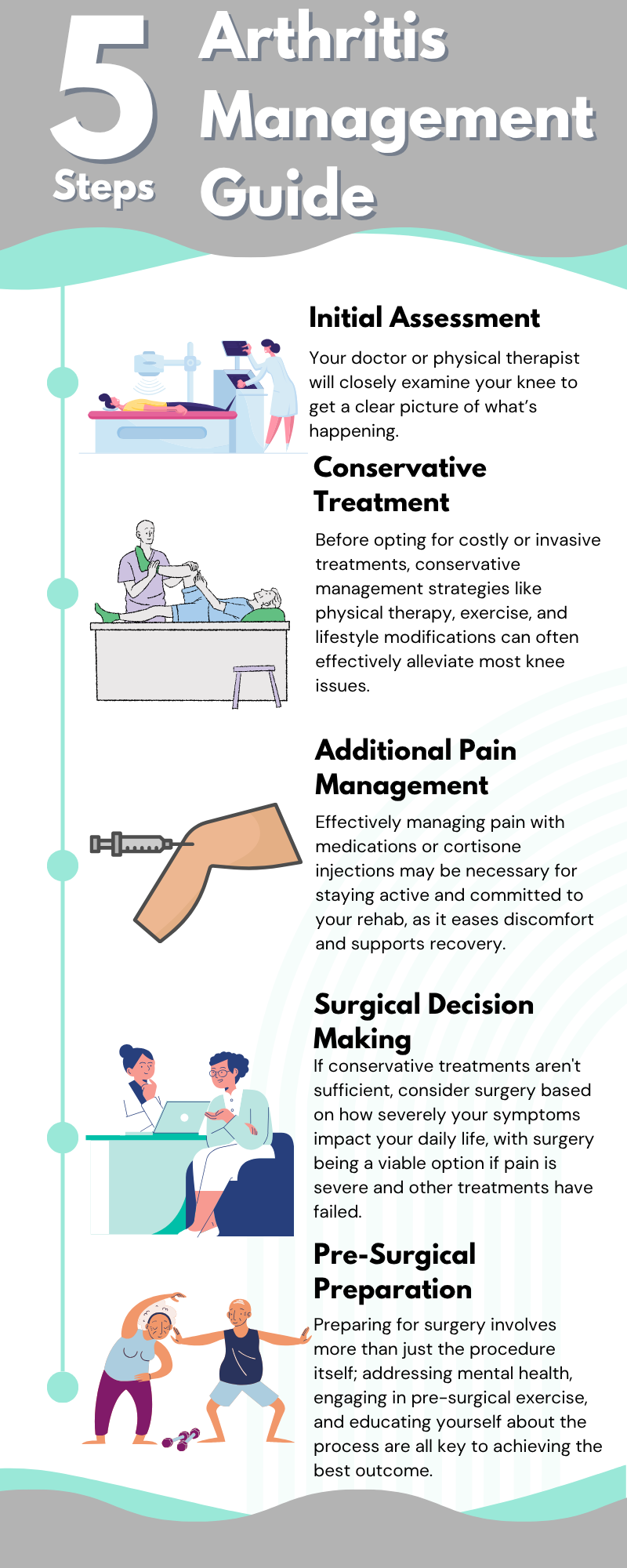
Step 1: Start With a Thorough Assessment
Before choosing treatment, you need to understand what is actually limiting you.
Arthritis severity on imaging matters, but it is not the whole story. Two people can have similar X-rays and very different pain, strength, walking tolerance, and daily function.
A useful assessment should consider:
- Symptoms: Where the pain is, what brings it on, how long it lasts, and what calms it down.
- Range of motion: How well the knee bends and straightens.
- Strength: Especially the quadriceps, hips, hamstrings, and calves.
- Walking quality: Limping, stride length, confidence, and tolerance.
- Stairs and sit-to-stands: These often reveal strength and control deficits.
- Swelling and irritability: How reactive the knee is after activity.
- Imaging: X-rays can show joint space narrowing, bone spurs, alignment changes, and arthritis severity.
The goal is to build a plan around the full picture, not just the scan.
Step 2: Explore Conservative Treatments
Conservative treatment should not mean “do nothing.” It should mean a focused plan to improve the knee’s capacity.
Physical Therapy
Physical therapy can help identify the movements, strength deficits, mobility limitations, and activity patterns that are keeping the knee irritated.
Physical therapy may help by:
- Strengthening the muscles that support the knee.
- Improving flexibility and mobility.
- Improving walking, stair control, and balance.
- Helping you find tolerable ways to stay active.
- Delaying surgery when symptoms can be managed well enough.
Lifestyle Adjustments
Lifestyle changes are not a punishment. They are ways to reduce the total stress on the knee while keeping you active.
- Weight management: Even small changes can reduce cumulative load through the knee during walking and stairs.
- Low-impact activity: Cycling, swimming, pool exercise, elliptical, and walking intervals can help maintain fitness with less joint irritation.
- Supportive gear: Footwear, braces, sleeves, or assistive devices may help some people move with less symptom flare-up.
- Healthy habits: Sleep, hydration, nutrition, and smoking cessation can influence inflammation, energy, healing, and activity tolerance.
Step 3: Manage Pain So You Can Stay Active
Pain management matters because pain can shrink your world. When pain leads to less movement, the knee often becomes stiffer and weaker, which can make pain even harder to manage.
Medication Options
Some people use topical NSAIDs, oral NSAIDs, acetaminophen, or other medications to manage symptoms. The best option depends on your health history, other medications, and risk factors.
The ACR/Arthritis Foundation guideline strongly recommends topical NSAIDs for knee osteoarthritis and strongly recommends oral NSAIDs for selected patients when appropriate. ACR/Arthritis Foundation osteoarthritis guideline
Injection Options
Injections may help some people reduce pain enough to move, exercise, or delay surgery, but they should be treated as tools, not complete plans.
- Cortisone: Can provide short-term relief for pain and inflammation, especially when the knee is reactive.
- Hyaluronic acid: May help some people, but guideline recommendations are mixed and benefits vary.
- PRP: May be considered by some clinicians for mild to moderate arthritis, but cost, preparation methods, and results vary.
If an injection helps, the pain-relief window should be used to build strength, improve activity tolerance, and make the knee more capable.
Step 4: Weigh Surgical Options
Surgery becomes more relevant when arthritis symptoms remain severe despite a reasonable trial of conservative treatment.
A practical decision usually includes:
- Mild to moderate symptoms: Continue building the non-surgical plan if function is improving and symptoms are manageable.
- Severe symptoms: If pain and disability are still limiting daily life despite treatment, partial or total knee replacement may be worth discussing.
The decision should be based on symptoms, function, imaging, goals, health status, and whether the available surgical option fits the actual problem.
Step 5: Prepare if Surgery Becomes the Right Option
If surgery becomes the best next step, preparation matters.
Useful preparation areas include:
- Mental preparation: Understanding the process can reduce stress and make recovery feel less chaotic.
- Pre-surgical physical therapy: Strengthening and mobility work can improve your starting point before surgery.
- Education: Knowing what early recovery usually involves helps you make better decisions after surgery.
- Home planning: Clear walkways, organize support, and prepare where you will rest, ice, elevate, and do exercises.
A Key Takeaway: Break the Pain and Inactivity Cycle
Pain can lead to less activity. Less activity can lead to stiffness and weakness. Stiffness and weakness can make the knee feel worse.
Breaking that cycle is one of the main goals of arthritis management.
How to break the cycle:
- Use pain management strategies to make movement more tolerable.
- Choose low-impact exercise that the knee can recover from.
- Strengthen the leg gradually instead of waiting for pain to disappear completely.
- Adjust activity based on the next-day response.
- Stay consistent long enough to see whether the knee can adapt.
Common Mistakes
- Treating the X-ray instead of the person’s actual symptoms and goals.
- Trying one treatment briefly and assuming nothing works.
- Using injections or medication without changing strength, activity, or load tolerance.
- Stopping movement completely because the knee hurts.
- Waiting until right before surgery to think about strength, home setup, and recovery planning.
Build the plan, then make the decision.
If this article helped you frame the big picture, these next reads can help you apply it more specifically.
FREE KNEE OA GUIDE
Need a Clear Plan for Knee Arthritis?
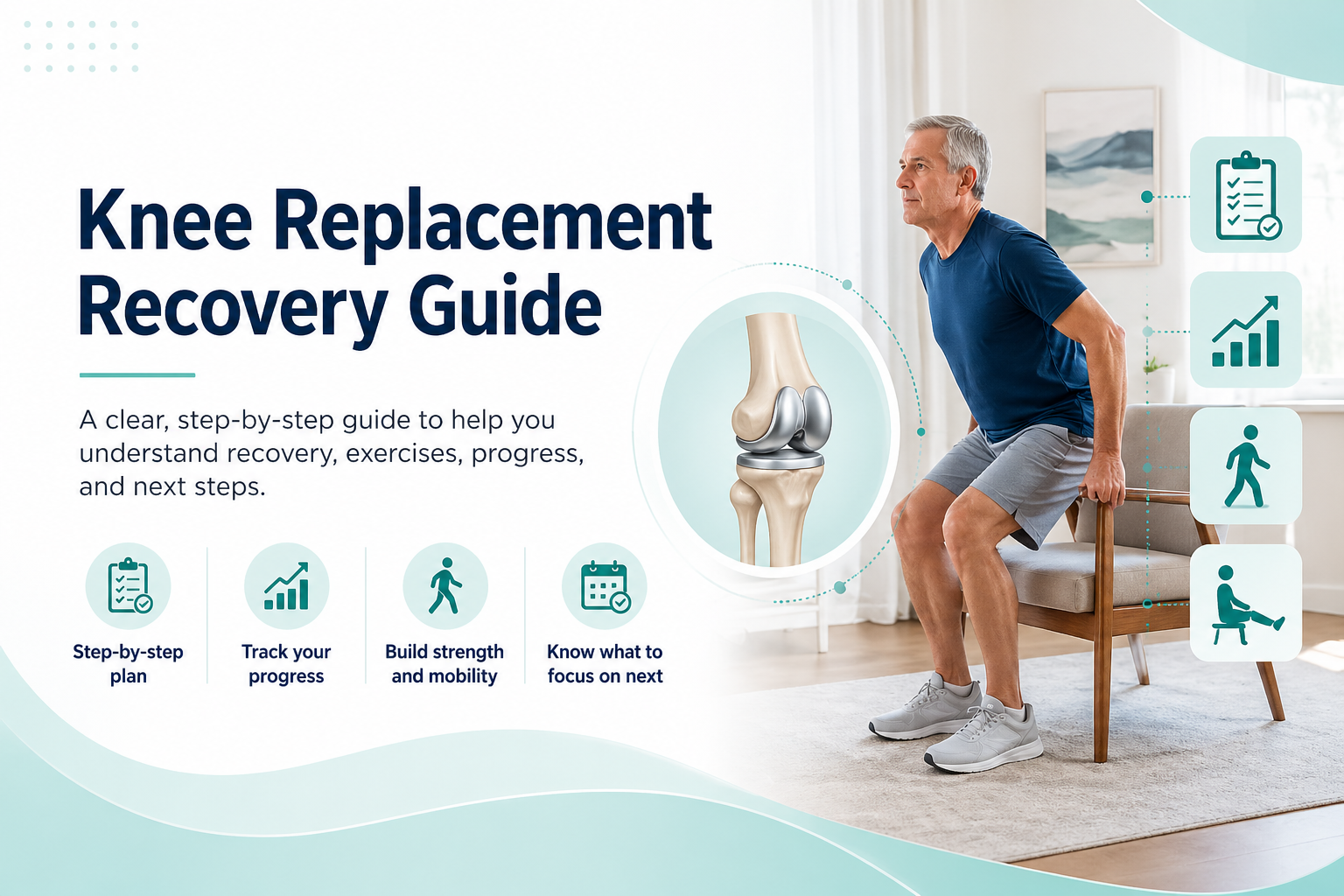
The free Knee Osteoarthritis Management Guide gives you a structured starting plan, guidance for adjusting exercise based on how your knee responds, and a simple way to track progress over time.
FAQ
What is the best first step for knee arthritis?
The best first step is a clear assessment of symptoms, motion, strength, walking quality, activity tolerance, and imaging. Treatment should match the full picture, not just the X-ray.
Can physical therapy help knee arthritis?
Yes. Physical therapy can help improve strength, mobility, walking, stairs, and activity tolerance. It does not reverse arthritis, but it can often improve how the knee feels and functions.
Are injections enough for knee arthritis?
Usually not by themselves. Injections may reduce symptoms for some people, but they work best when paired with exercise, strength training, activity modification, and a broader plan.
When should I consider knee replacement?
Knee replacement becomes more relevant when arthritis is severe, daily life is significantly limited, and conservative treatment is no longer giving enough relief.
Can I delay knee replacement with conservative care?
Sometimes. A consistent plan focused on strength, activity modification, weight management when appropriate, and pain management can help some people delay or avoid surgery.